

Farewell and Thank You Jamie! UFhoneybeelab

Farewell and Thank You Jamie!

Farewell, Dr. Ellis! The University of Georgia is incredibly lucky to have such an astounding leader among their ranks. We will continue to do the great work that we have done under your guidance, and we look forward to the next era of honey bee research! This was a surprise video played during the Spring Bee College 2026 social. Featuring…
Alexa Mantifel
May 16, 2026
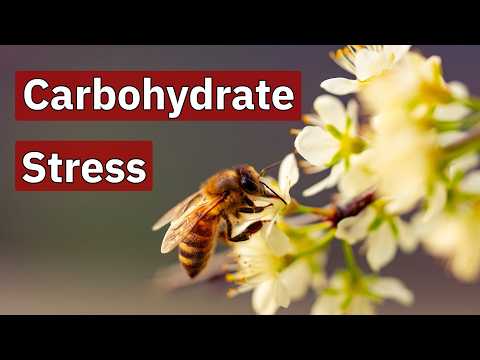
Carbohydrate Stress | Beekeeping Academy | Ep. 93 UFhoneybeelab

Carbohydrate Stress | Beekeeping Academy | Ep. 93

Honey bees can suffer from carbohydrate stress. It is important that beekeepers be able to recognize the signs of carbohydrate stress and know how to address this problem. Dr. Ellis covers these topics in this video. Links: 📲 Follow us on Instagram, Facebook and X @UFHoneyBeeLab 🎧 Listen to “Two Bees in a Podcast” on any podcasting app đź“– Interested…
Alexa Mantifel
May 16, 2026
Valley Beekeeping Supplies

Bee Mite Fight Chemical & Genetic Arms Race!

We're fighting mites on two fronts: protecting today's hives with targeted treatments and breeding stronger bees for tomorrow. This evolutionary arms race aims to reduce reliance on chemicals, empowering bees to win the battle biologically. #BeeHealth #SustainableAgriculture #PestControl #Apiculture #Beekeeping #Evolution #honeybees #valleybeekeeping http://www.valleybeekeeping.com
Breck Demers
May 15, 2026
Episode 238: Exploring Non-Apis Bees with Josh Cambell UFhoneybeelab

Episode 238: Exploring Non-Apis Bees with Josh Cambell

In this episode of Two Bees in a Podcast, Amy Vu and Dr. Jamie Ellis discuss non-Apis bees with Josh Cambell, a Research Ecologist with the USDA-ARS at the Northern Plains Agricultural Research Lab in Sidney, Montana. Check out our website: www.ufhoneybee.com (https://www.ufhoneybee.com/)  for additional resources from today's episode. 
Alexa Mantifel
May 15, 2026
Valley Beekeeping Supplies

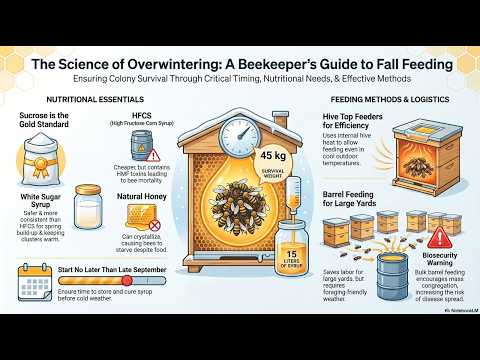
Beekeeper’s Fall Feeding Guide

This text highlights the critical importance of supplemental feeding to ensure honey bee colonies survive the winter months. To achieve the best results, beekeepers are encouraged to use sucrose syrup rather than honey or corn syrup to provide a clean and reliable energy source. The author outlines specific feeding methods, comparing the convenience of bulk barrel feeding with the efficiency…
Breck Demers
May 14, 2026
Valley Beekeeping Supplies

Unlock Legal Safety Your 6 Minute Compliance Blueprint

Understand your core legal safety duties. Determine your employee headcount to know your specific requirements under the OHSA. Get your health and safety policy and workplace violence/harassment policy drafted, implemented, and reviewed annually to protect your workforce and business. #LegalCompliance #WorkplaceSafety #OHSA #BusinessOwner #HRTips #EmployeeSafety #honeybees #valleybeekeeping http://www.valleybeekeeping.com
Breck Demers
May 13, 2026
Valley Beekeeping Supplies

Science of Winter Bee Survival

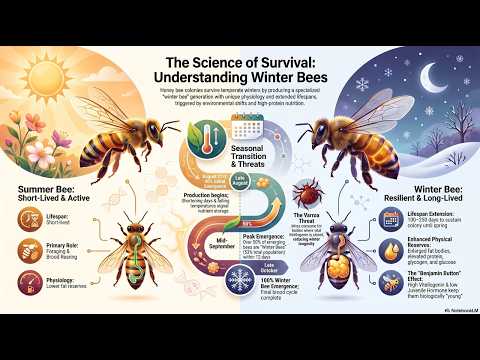
This text explores the biological mechanisms and environmental triggers that allow honey bee colonies to produce long-lived winter bees capable of surviving cold climates. Unlike their short-lived summer counterparts, these specialized workers possess enlarged fat bodies and high levels of vitellogenin, a protein that preserves their health and youthfulness for several months. Factors such as shorter day lengths, dropping temperatures,…
Breck Demers
May 12, 2026
Valley Beekeeping Supplies

Ontario Varroa Research

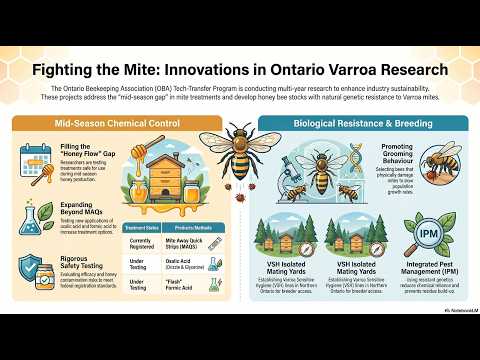
The Ontario Beekeeping Association's Tech-Transfer Program initiated several multi-year research projects in 2018 aimed at enhancing honey bee sustainability and Varroa mite management. One primary initiative involves testing new mid-season chemical treatments, such as oxalic and formic acids, to ensure they are safe and effective for use during the honey flow. Another major effort focuses on genetic selection, specifically breeding…
Breck Demers
May 10, 2026
Valley Beekeeping Supplies

Hidden Danger in Your Honey Lead Contamination Found!

You work hard for that liquid gold, but a hidden danger could be souring your success. Lead contamination, found in both new and old beekeeping equipment like extractors, tanks, and brass pumps, poses a food safety risk. Health Canada advises levels below 0.2 parts per million, but even tiny amounts of lead are a concern. Test your gear—especially seams and…
Breck Demers
May 9, 2026