
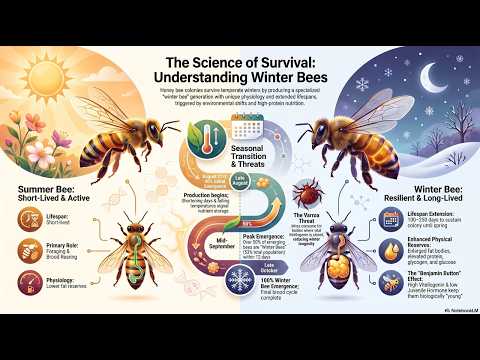
This text explores the biological mechanisms and environmental triggers that allow honey bee colonies to produce long-lived winter bees capable of surviving cold climates. Unlike their short-lived summer counterparts, these specialized workers possess enlarged fat bodies and high levels of vitellogenin, a protein that preserves their health and youthfulness for several months. Factors such as shorter day lengths, dropping temperatures, and a reduction in available brood rearing induce these physiological changes. The author emphasizes that the production of these vital bees typically begins in late August, making early intervention against Varroa mites essential for colony survival. Because mites feed on the bee’s fat reserves, maintaining low infestation levels before autumn is critical to ensuring the winter population is strong enough to last until spring. #honeybees #valleybeekeeping
http://www.valleybeekeeping.com
