

Valley Beekeeping Supplies

Environmental Toxins The Water Crisis You’re Ignoring!

Critical environmental threats often go unaddressed due to slow regulatory processes. While land-based data was contested, water runoff revealed high neonicotinoid levels destroying aquatic insects. Despite proposals to cancel uses, a lengthy phase-out and corporate pushback mean Canadian insects remain exposed for years. Activist groups are now taking legal action. #EnvironmentalProtection #PesticideRegulation #Neonicotinoids #Conservation #EcoJustice #HealthCanada #honeybees #valleybeekeeping http://www.valleybeekeeping.com
Breck Demers
June 18, 2026
Valley Beekeeping Supplies

Ontario Bee Antibiotic Regulation Guide

This source details the new regulatory framework in Ontario that requires beekeepers to obtain veterinary prescriptions for antibiotics starting in late 2018. Driven by a global effort to combat antimicrobial resistance, these rules necessitate a formal Vet-Client-Patient Relationship to prevent the spread of American foulbrood. The text highlights how an industry working group successfully negotiated for telemedicine exemptions and flexible…
Breck Demers
June 14, 2026
Valley Beekeeping Supplies

Beekeeping Secrets Why Regular Stings Build Immunity

Shocking truth about bee stings: avoiding them completely can increase allergy risk. For beekeepers, regular exposure trains the immune system, drastically reducing severe reactions over time. It's a natural adaptation leading to calm work, even with minimal gear. #Beekeeping #AllergyFacts #ImmunityBoost #NatureScience #BeekeeperLife #honeybees #valleybeekeeping http://www.valleybeekeeping.com
Breck Demers
June 13, 2026
Valley Beekeeping Supplies

Canada’s Neonicotinoid Phase out

Health Canada's Pest Management Regulatory Agency recently conducted a formal review of three neonicotinoid pesticides to determine their safety for the environment. While the agency initially found that these chemicals did not pose an unacceptable risk to pollinators, they concluded that the high concentrations found in water were devastating to aquatic invertebrates. Consequently, the government proposed a multi-year phase-out of…
Breck Demers
June 12, 2026
Valley Beekeeping Supplies

Bee Survival New Research on Mite Resistance Explained

New research explores how environmental stressors, treatment toxicity, and bee behaviors synergize for colony survival. The Varroa destructor mite causes major winter losses, and resistance to synthetic acaricides is making control difficult. #Beekeeping #VarroaMite #ColonyHealth #PestControl #BeeResearch #honeybees #valleybeekeeping http://www.valleybeekeeping.com
Breck Demers
June 12, 2026
Valley Beekeeping Supplies

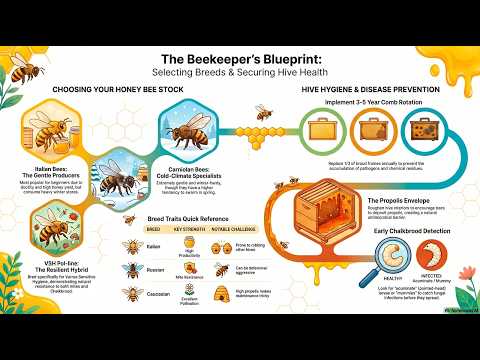
Beekeeping Breeds and Hive Health

These sources provide a comprehensive overview of beekeeping management, focusing on hive health, breed selection, and sanitation. They detail the characteristics of popular honey bee varieties like Italian and Carniolan bees, while identifying significant biological threats such as Varroa mites, Nosema, and Chalkbrood. Experts emphasize the importance of hygienic best practices, including the regular rotation of wax combs to prevent…
Breck Demers
June 11, 2026
Episode 242: Varroa Biology, Evolution and Control with Dr. Nurit Eliash UFhoneybeelab

Episode 242: Varroa Biology, Evolution and Control with Dr. Nurit Eliash

In this episode of Two Bees in a Podcast, Amy Vu and Dr. Jamie Ellis discuss Varroa biology, evolution, and control with Dr. Nurit Eliash, Research Fellow at the Honey Bees & Mites Lab at the University of Haifa in Israel. Check out our website: www.ufhoneybee.com (https://www.ufhoneybee.com/)  for additional resources from today's episode. 
Alexa Mantifel
June 11, 2026
Valley Beekeeping Supplies

Chalkbrood Infection Hive Reset Protocol Explained!

Worker bees are removing chalk-like pellets from the hive – a sign of chalkbrood infection. This fungus thrives in cool, damp, stagnant conditions. Eradication requires fixing airflow, replacing comb, and introducing resistant bees. Visible removal only hides symptoms; a full reset is key. #Beekeeping #Chalkbrood #PestControl #Apiculture #HiveHealth #honeybees #valleybeekeeping http://www.valleybeekeeping.com
Breck Demers
June 10, 2026
Valley Beekeeping Supplies

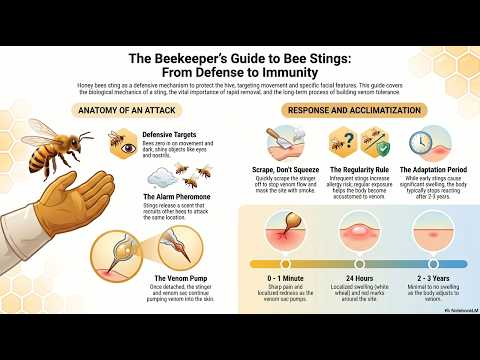
Guide to Bee Sting Immunity

Maintaining a presence in apiaries requires an understanding of how honey bees defend their colonies through stinging moving or dark targets. This resource explains that when a sting occurs, the venom apparatus remains in the skin and must be scraped away quickly to limit the injection of toxins. To prevent further attacks, beekeepers often use smoke to hide the alarm…
Breck Demers
June 9, 2026